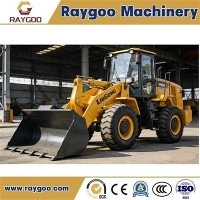
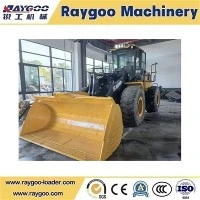
Hey there! I'm a supplier of 10 Ton Wheel Loaders, and today I'm gonna walk you through how an operator controls the movement of these powerful machines.
Getting Familiar with the Cockpit
First things first, when an operator climbs into the cockpit of a 10 Ton Wheel Loader, they're greeted by a bunch of controls. It might look a bit overwhelming at first, but once you get the hang of it, it's like riding a bike.
The seat is adjustable, so the operator can get comfy and have a good view of the surroundings. There are large windows all around, which are crucial for safety and visibility. You know, you gotta see what's going on outside, especially when you're moving a big machine like this.


Steering the Beast
Let's start with steering. The steering wheel in a 10 Ton Wheel Loader is similar to what you'd find in a regular car, but it's a bit beefier. It's connected to a hydraulic steering system. When the operator turns the wheel, hydraulic fluid is pumped to the steering cylinders. These cylinders then move the front wheels, allowing the loader to turn.
The turning radius of a 10 Ton Wheel Loader is pretty important. You don't want it to be too wide, or you'll have a hard time maneuvering in tight spaces. Most of these loaders are designed to have a relatively small turning radius, which makes them quite agile for their size.
Controlling the Forward and Reverse Movement
Next up is controlling the forward and reverse movement. There's a gear selector, just like in a car. The operator can choose between different gears depending on the speed they need. For slow, precise work, they'll use a lower gear. And when they need to cover some distance quickly, they can shift to a higher gear.
The accelerator pedal works in a similar way to a car's as well. Pressing it down makes the engine rev up, and the loader moves forward or backward. The brake pedal is there to stop the machine when needed. It's a hydraulic brake system, which provides strong and reliable stopping power.
Operating the Bucket
The bucket is one of the most important parts of a 10 Ton Wheel Loader. It's what does the actual digging and loading work. To control the bucket, there are a couple of joysticks in the cockpit.
One joystick is used to control the lift and lower movement of the bucket. Pushing the joystick forward lowers the bucket, and pulling it back raises it. The other joystick controls the tilt of the bucket. Moving it left or right tilts the bucket in the corresponding direction.
When the operator wants to pick up some material, they'll lower the bucket to the ground, drive forward into the pile, and then tilt the bucket back to scoop up the material. Once the bucket is full, they can lift it up and drive to the dumping location. At the dumping site, they'll tilt the bucket forward to release the material.
Using the Auxiliary Controls
Apart from the basic controls, there are also some auxiliary controls in a 10 Ton Wheel Loader. These can be used for things like turning on the lights, activating the horn, or adjusting the hydraulic flow to the attachments.
Some loaders come with additional attachments, like a fork or a grapple. To use these attachments, the operator needs to adjust the hydraulic settings using the auxiliary controls. This allows the loader to perform a wider range of tasks.
Safety Features and Monitoring
Safety is always a top priority when operating a 10 Ton Wheel Loader. There are several safety features built into these machines. For example, there are seat belts to keep the operator secure in case of sudden stops or movements.
There are also warning lights and alarms in the cockpit. These can alert the operator if there's a problem with the engine, hydraulic system, or other important components. The operator can monitor the machine's performance through a dashboard display. It shows things like engine temperature, oil pressure, and fuel level.
Training and Experience
Operating a 10 Ton Wheel Loader requires proper training and experience. New operators usually go through a training program where they learn about the machine's controls, safety procedures, and maintenance.
Even after the training, it takes time to become really good at operating the loader. You need to develop a feel for the machine, understand how it responds to different controls, and learn how to work efficiently in different conditions.
Why Choose a 10 Ton Wheel Loader?
If you're in the market for a wheel loader, a 10 Ton Wheel Loader is a great choice. It's big enough to handle a large amount of material, but it's still relatively easy to maneuver. It's suitable for a wide range of applications, such as construction sites, mining operations, and agricultural work.
If you're interested in learning more about our 10 Ton Wheel Loader, we also have other options like the 14 Ton Wheel Loader and the 20 Ton Wheel Loader. These larger loaders offer even more power and capacity for heavier jobs.
If you're thinking about purchasing a wheel loader, don't hesitate to get in touch. We can provide you with more information, answer your questions, and help you find the right machine for your needs.
References
- Construction Equipment Handbook
- Wheel Loader Operator's Manuals