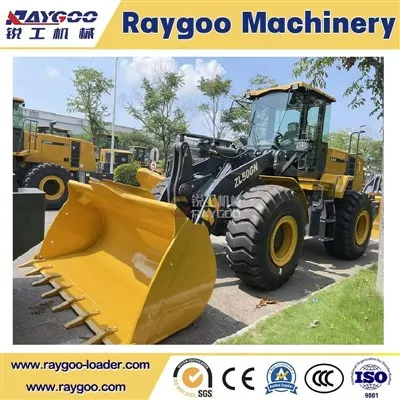
Log loaders mainly include the following types:
Tire loader: With a tire-type special chassis as the running mechanism, it has the advantages of flexibility, high operating efficiency, low manufacturing cost, and easy use and maintenance. The tire also has good buffering and vibration reduction functions, which improves the comfort of operation.
Crawler loader: With a crawler-type special chassis or industrial tractor as the running mechanism, it has the characteristics of large traction, good off-road performance and stability, strong climbing ability, and small turning radius, which is suitable for working in environments with harsh site conditions.
Front-engine loader: The engine is placed in front of the operator.
Rear-engine loader: The engine is placed behind the operator. This structure can expand the driver's field of vision, and the rear engine can also be used as a counterweight to reduce the overall equipment weight of the loader.
Swivel wheel steering loader: Relying on the front wheels, rear wheels or all wheels of the wheeled chassis for steering, it is suitable for occasions requiring high maneuverability.
Articulated steering loader: Steering by horizontal swinging of the front wheels, front frame and working device of the wheeled chassis around the hinge pins with the front and rear frames, suitable for working in narrow places.
Skid-steer loader: Steering by the speed difference of the running wheels on both sides of the wheeled chassis or the driving wheels on both sides of the crawler chassis, suitable for working in extremely narrow places.
Front-wheel drive loader: The front wheels of the running structure are used as driving wheels.
Rear-wheel drive loader: The rear wheels of the running structure are used as driving wheels.
All-wheel drive loader: Both the front and rear wheels of the running structure are used as driving wheels, and modern loaders mostly use this driving method.