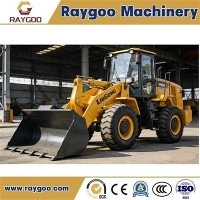
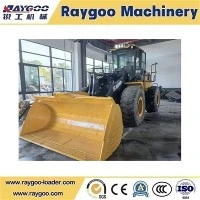
Can a rubber wheel dozer be used in forestry operations? That's a question I've been asked a lot lately, especially since I'm a supplier of Rubber Tyre Dozers. And let me tell you, it's a topic that's got a lot of layers to it.
First off, let's talk about what a rubber wheel dozer is. Unlike your traditional crawler dozers with tracks, rubber wheel dozers roll on - well, rubber wheels. This gives them some unique advantages. They're generally more maneuverable than crawler dozers. You can turn them around in a tighter space, which is a huge plus in a forest where space can be limited. They also tend to move faster on flat or gently - sloped terrain. This means you can cover more ground in less time, which is always a good thing when you're on a tight schedule.
Now, let's dig into forestry operations. There are several key tasks in forestry, and each one has its own set of requirements for equipment.
Site Preparation
One of the first steps in forestry is site preparation. This involves clearing the land of debris, stumps, and small trees to make way for new plantings or for access roads. A rubber wheel dozer can be really useful here. Its maneuverability allows it to navigate around larger trees that you might want to keep, reducing the risk of accidental damage. The rubber wheels also cause less soil compaction compared to crawler dozers. In forestry, soil health is super important, as it affects the growth of future trees. Less compaction means better water infiltration and root growth, so it's a win - win.
However, there are some limitations. If the site has a lot of large stumps or rocks, the rubber wheels might not provide as much traction as tracks. You could end up spinning your wheels and not getting much done. But if you're dealing with relatively soft ground and smaller obstacles, a rubber wheel dozer can be a great choice.
Logging Road Construction
Building and maintaining logging roads is another crucial part of forestry operations. Rubber wheel dozers can be used to grade and level the road surface. They can quickly move soil and gravel to create a smooth driving surface for logging trucks. Their speed is an asset here, as it allows for faster road construction.
But again, there are challenges. Logging roads often go through hilly or uneven terrain. On steep slopes, the rubber wheels might struggle to maintain traction, especially if the ground is wet. And if the road needs to be widened or if there's a lot of heavy - duty excavation work involved, a crawler dozer might be more suitable.


Log Skidding
Skidding is the process of pulling logs from the cutting area to a central location. Some rubber wheel dozers can be equipped with winches for this task. They can be used to skid smaller logs on relatively flat ground. The advantage here is that they can move quickly between different skidding points.
Yet, for larger logs or in more difficult terrain, the limited pulling power of a rubber wheel dozer compared to a crawler dozer can be a drawback. The rubber wheels also have a harder time dealing with rough and muddy ground, which is common in forestry areas.
Environmental Considerations
In today's world, environmental concerns are at the forefront of forestry operations. Rubber wheel dozers have a bit of an edge here. As I mentioned earlier, they cause less soil compaction. They also produce less noise pollution compared to crawler dozers. This is important in areas where wildlife might be affected by loud machinery.
But we can't ignore the fact that the rubber tires can wear out over time, and the disposal of worn - out tires can be an environmental issue. However, many modern rubber wheel dozers are designed with more durable and eco - friendly tires to mitigate this problem.
Cost - effectiveness
From a cost perspective, rubber wheel dozers can be a smart investment for forestry operations. They're generally cheaper to purchase and maintain than crawler dozers. The rubber tires are less expensive to replace than tracks, and the maintenance of the wheel - based system is often simpler.
If your forestry operation doesn't require heavy - duty, continuous use of a dozer, a rubber wheel dozer can offer a cost - effective solution. You can get the job done without breaking the bank.
So, Can It Be Used?
The short answer is yes, a rubber wheel dozer can be used in forestry operations. But it's not a one - size - fits - all solution. It depends on the specific tasks, the terrain, and the scale of your operation.
If you're dealing with smaller - scale forestry work, like site preparation for a small plantation or maintaining short logging roads, a rubber wheel dozer can be a great choice. Its maneuverability, speed, and lower environmental impact make it an attractive option.
On the other hand, if you're involved in large - scale logging with heavy - duty excavation and skidding of large logs on difficult terrain, you might still need to rely on crawler dozers for some tasks.
As a supplier of Rubber Tyre Dozers, I'm always here to help you figure out if a rubber wheel dozer is the right fit for your forestry operation. Whether you're just starting out or looking to upgrade your equipment, I can provide you with all the information you need.
If you're interested in learning more about our rubber wheel dozers or want to discuss how they can be integrated into your forestry operations, don't hesitate to reach out. We can have a detailed chat about your specific needs and see if our dozers are the solution you've been looking for.
References
- "Forestry Equipment Handbook", Published by Forestry Press
- "Comparative Analysis of Crawler and Rubber Wheel Dozers in Forestry Applications", Journal of Forestry Technology