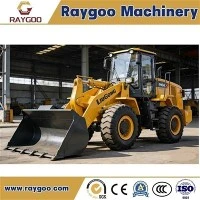
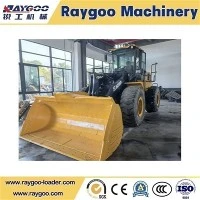
Hey there! As a wheel loader supplier, I've been getting a lot of questions lately about how these beasts control their speed. So, I thought I'd break it down for you in this blog post.
First off, let's talk about why speed control is so important in a wheel loader. These machines are used in a variety of industries, from construction to mining, and they need to be able to operate at different speeds depending on the task at hand. Whether you're moving heavy loads, navigating tight spaces, or traveling long distances, having precise speed control is crucial for safety and efficiency.
Now, let's get into the nitty-gritty of how wheel loaders actually control their speed. There are a few different mechanisms at play here, and I'll go over each one in detail.
Hydrostatic Transmission
One of the most common speed control mechanisms in wheel loaders is the hydrostatic transmission. This system uses hydraulic fluid to transfer power from the engine to the wheels, allowing for smooth and precise speed control.
Here's how it works: The engine drives a hydraulic pump, which pressurizes the hydraulic fluid. This pressurized fluid is then sent to a hydraulic motor, which converts the fluid's energy into mechanical energy to turn the wheels. By adjusting the flow of hydraulic fluid to the motor, the operator can control the speed of the wheel loader.
The hydrostatic transmission has several advantages over other types of transmissions. For one, it provides infinitely variable speed control, which means the operator can set the speed to exactly what they need for the task at hand. This is especially useful in applications where precise speed control is required, such as grading or material handling.


Another advantage of the hydrostatic transmission is its ability to provide high torque at low speeds. This makes it ideal for tasks that require a lot of power, such as digging or lifting heavy loads.
However, the hydrostatic transmission also has some drawbacks. It can be more expensive to maintain than other types of transmissions, and it may not be as efficient at high speeds.
Powershift Transmission
Another common speed control mechanism in wheel loaders is the powershift transmission. This system uses a series of clutches and gears to transfer power from the engine to the wheels, allowing for multiple speed ranges.
Here's how it works: The engine drives a torque converter, which multiplies the engine's torque and sends it to the transmission. The transmission then uses a series of clutches and gears to shift between different speed ranges. The operator can select the desired speed range using a gear selector lever.
The powershift transmission has several advantages over the hydrostatic transmission. It is generally more efficient at high speeds, which means it can save fuel and reduce operating costs. It is also more durable and reliable than the hydrostatic transmission, which makes it a good choice for heavy-duty applications.
However, the powershift transmission also has some drawbacks. It does not provide infinitely variable speed control, which means the operator has to select from a limited number of speed ranges. This can make it less precise than the hydrostatic transmission in some applications.
Variable-Speed Drive
A newer speed control mechanism that is becoming more popular in wheel loaders is the variable-speed drive (VSD). This system uses an electric motor and a variable-frequency drive (VFD) to control the speed of the wheel loader.
Here's how it works: The engine drives a generator, which produces electricity. This electricity is then sent to the VFD, which adjusts the frequency and voltage of the electricity to control the speed of the electric motor. The electric motor then drives the wheels of the wheel loader.
The VSD has several advantages over the hydrostatic and powershift transmissions. It provides infinitely variable speed control, which means the operator can set the speed to exactly what they need for the task at hand. It is also more efficient than the hydrostatic transmission at high speeds, and it produces less noise and emissions.
However, the VSD also has some drawbacks. It can be more expensive to purchase and install than the hydrostatic and powershift transmissions, and it may not be as durable or reliable in some applications.
Which Speed Control Mechanism is Right for You?
So, which speed control mechanism is right for your wheel loader? The answer depends on a variety of factors, including the type of application, the operating conditions, and your budget.
If you need precise speed control for tasks such as grading or material handling, the hydrostatic transmission may be the best choice. If you need a more efficient and durable transmission for heavy-duty applications, the powershift transmission may be a better option. And if you're looking for a more advanced and environmentally friendly speed control mechanism, the VSD may be worth considering.
At our company, we offer a wide range of wheel loaders with different speed control mechanisms to meet the needs of our customers. Whether you're in the market for a 3 Ton Wheel Loader, a The Used SDLG L958 Wheel Loader in Good Condtion, or a Wheel Loader XC958, we can help you find the right machine for your needs.
If you have any questions about our wheel loaders or their speed control mechanisms, please don't hesitate to contact us. We'd be happy to help you find the perfect machine for your business.
References
- "Wheel Loader Basics: How They Work and What They Do." Construction Equipment Guide, 2021.
- "Hydrostatic Transmission vs. Powershift Transmission: Which is Right for Your Equipment?" Equipment World, 2020.
- "Variable-Speed Drives: The Future of Wheel Loader Technology?" Mining Magazine, 2021.