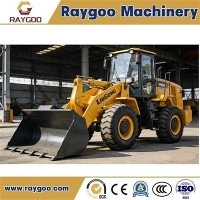
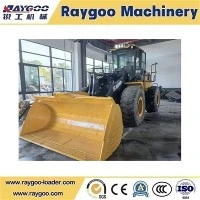
Hey there! As a supplier of mini front loaders, I've seen my fair share of these machines go through their paces. Mini front loaders are super handy, whether you're working on a small construction site, a farm, or doing some landscaping. But like any piece of equipment, they're bound to show signs of wear and tear over time. In this blog, I'm gonna break down the common signs you should look out for in your mini front loader.
1. Uneven Tire Wear
One of the first things you'll notice if your mini front loader is starting to wear out is uneven tire wear. Tires are the contact point between your loader and the ground, and they take a lot of abuse. If you see that one side of the tire is more worn than the other, it could be a sign of alignment issues. Misaligned wheels can cause the tires to scrub against the ground unevenly, leading to premature wear.


Another thing to check is the tread depth. If the tread is getting too low, it can affect the loader's traction, especially on slippery surfaces. You don't want to be in a situation where your loader can't get a good grip and starts sliding around. It's not only dangerous but can also cause damage to the machine. If you're in the market for a good mini front loader with reliable tires, you might want to check out The used Wheel Loader FL936 H in good conditon.
2. Hydraulic System Leaks
The hydraulic system is the heart of a mini front loader. It's what allows the loader to lift, lower, and tilt the bucket. If you notice any hydraulic fluid leaks, it's a big red flag. Hydraulic fluid is under high pressure, and even a small leak can lead to a loss of power and efficiency.
You might see fluid dripping from the hoses, fittings, or cylinders. Sometimes, you can spot a leak by looking for wet spots or stains on the ground where the loader is parked. Leaks can be caused by worn-out seals, damaged hoses, or loose fittings. If you ignore a hydraulic leak, it can lead to more serious problems down the road, like damage to the hydraulic pump or cylinders.
If you're considering a new mini front loader with a reliable hydraulic system, take a look at Wheel Loader XCMG LW150FM. It's designed to minimize the risk of hydraulic leaks and keep your loader running smoothly.
3. Excessive Noise
A mini front loader should run relatively quietly. If you start hearing strange noises, like rattling, grinding, or squealing, it's a sign that something is wrong. Rattling noises could be coming from loose parts, like bolts or brackets. Grinding noises might indicate a problem with the gears or bearings. Squealing could be a sign of a worn-out belt or a problem with the brakes.
Don't just ignore these noises. They're your loader's way of telling you that it needs some attention. If you're not sure what's causing the noise, it's best to have a professional mechanic take a look. Ignoring the noise could lead to more extensive damage and costly repairs.
4. Decreased Performance
If your mini front loader is taking longer to lift heavy loads or seems to be struggling to do its job, it could be a sign of wear and tear. This could be due to a number of factors, like a worn-out engine, a clogged air filter, or a problem with the transmission.
A worn-out engine might not be able to produce enough power to lift heavy loads efficiently. A clogged air filter can restrict the airflow to the engine, reducing its performance. And a problem with the transmission can cause the loader to shift gears roughly or not at all.
If you're looking for a mini front loader that offers consistent performance, check out Wheel Loader LW330FV. It's built to handle tough jobs and maintain its performance over time.
5. Rust and Corrosion
Rust and corrosion can be a real problem for mini front loaders, especially if they're used in wet or corrosive environments. Rust can weaken the metal parts of the loader, making them more prone to breakage. You might notice rust on the frame, the bucket, or the hydraulic cylinders.
To prevent rust and corrosion, it's important to keep your loader clean and dry. Regularly wash it with a mild detergent and water, and make sure to dry it thoroughly. You can also apply a rust inhibitor to the metal parts to protect them from the elements.
6. Loose or Worn-out Controls
The controls of a mini front loader are what allow you to operate it safely and efficiently. If you notice that the controls are loose or hard to move, it could be a sign of wear and tear. Loose controls can make it difficult to operate the loader accurately, which can lead to accidents.
Worn-out controls might not respond as quickly as they should, or they might stick in one position. This can be a safety hazard, especially if you need to make a quick maneuver. If you experience any problems with the controls, it's important to have them checked and repaired as soon as possible.
7. Poor Visibility
Good visibility is essential when operating a mini front loader. If you're having trouble seeing what's in front of, behind, or to the sides of the loader, it could be due to a dirty or cracked windshield, a misaligned mirror, or a problem with the lighting.
A dirty windshield can reduce your visibility, especially in low-light conditions. A cracked windshield can also be a safety hazard, as it can shatter if it's hit by an object. Misaligned mirrors can make it difficult to see what's going on around you. And if the lighting is not working properly, you might not be able to see in the dark or in poor weather conditions.
To ensure good visibility, keep your windshield clean and replace it if it's cracked. Make sure the mirrors are properly aligned, and check the lighting regularly to make sure it's working.
Conclusion
So, there you have it – the common signs of wear and tear in a mini front loader. By keeping an eye out for these signs, you can catch problems early and prevent them from turning into major issues. If you're in the market for a new or used mini front loader, I hope this blog has been helpful in guiding your decision.
If you have any questions or are interested in purchasing a mini front loader, feel free to reach out. We're here to help you find the right machine for your needs and budget. Let's start a conversation and see how we can work together to get you the best mini front loader for your job.
References
- General knowledge and experience from working as a mini front loader supplier.
- Manufacturer's manuals and specifications for various mini front loader models.