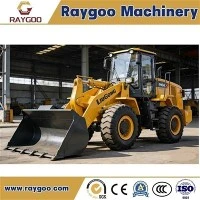
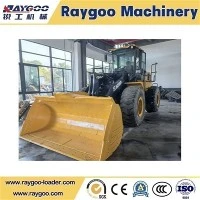
Hey there! As a supplier of large wheel loaders, I'm super excited to chat with you about the transmission systems of these bad - boys. Large wheel loaders are beasts on construction sites, mines, and other heavy - duty work areas. And the transmission system is like the heart of these machines, making sure they can do their jobs efficiently.
Let's start with the basics. There are mainly two types of transmission systems commonly used in large wheel loaders: the power - shift transmission and the hydrostatic transmission.
Power - Shift Transmission
Power - shift transmissions are the workhorses in the large wheel loader world. They've been around for a long time and are trusted by many operators.
How it works
In a power - shift transmission, there are multiple gears that can be shifted under load. That means you don't have to stop the machine to change gears. It uses a hydraulic system to engage and disengage the clutches, which connect different gears to the engine and the wheels. When you want to shift gears, the hydraulic system sends pressure to the appropriate clutch, allowing for a smooth transition between gears.
Advantages
One of the biggest advantages of power - shift transmissions is their durability. They're built to handle high torque and heavy loads. This makes them perfect for large wheel loaders that often deal with large amounts of material, like in mining operations. They also offer a wide range of gear ratios, which gives operators more control over the speed and power of the loader. Whether you're moving at a slow crawl while loading a truck or need to pick up some speed to move across a large site, a power - shift transmission can handle it.
Disadvantages
However, power - shift transmissions aren't without their drawbacks. They can be a bit less fuel - efficient compared to some other types of transmissions. The hydraulic system that controls the clutch engagement requires energy, and this can lead to higher fuel consumption, especially in stop - and - go operations. Also, the maintenance of power - shift transmissions can be a bit more complex. The clutches and hydraulic components need regular inspection and servicing to ensure they're working properly.
Hydrostatic Transmission
Hydrostatic transmissions are a more modern option for large wheel loaders. They've gained popularity in recent years due to their unique features.
How it works
A hydrostatic transmission uses hydraulic pumps and motors to transfer power from the engine to the wheels. The engine drives a hydraulic pump, which pressurizes hydraulic fluid. This pressurized fluid then flows to a hydraulic motor, which converts the hydraulic energy back into mechanical energy to turn the wheels. The speed and direction of the loader can be controlled by adjusting the flow of the hydraulic fluid.
Advantages
One of the main advantages of hydrostatic transmissions is their smooth operation. There are no gears to shift, so the loader can accelerate and decelerate smoothly. This makes it easier for operators to control the machine, especially in tight spaces. Hydrostatic transmissions also offer infinite speed control within a certain range. You can fine - tune the speed of the loader to match the task at hand, whether it's precise material handling or quick movement across a site. They're also more fuel - efficient in some applications, like when the loader is operating at low speeds or in a lot of start - stop situations.
Disadvantages
On the flip side, hydrostatic transmissions have some limitations. They're generally more expensive to manufacture and purchase compared to power - shift transmissions. The hydraulic components, such as pumps and motors, are complex and require high - precision engineering, which drives up the cost. They also have a lower power - to - weight ratio compared to power - shift transmissions. This means that for very large and heavy - duty applications, a hydrostatic transmission might not be as suitable as a power - shift transmission.


Now, let's talk about some of our large wheel loaders and how these transmission systems are incorporated. We have some amazing models, like the 12 - ton Front End Loader. This loader is a great all - around machine. It can be equipped with either a power - shift or a hydrostatic transmission, depending on your specific needs. If you're working in a large construction site where you need to move a lot of material quickly and over long distances, the power - shift transmission might be the better choice. But if you're doing more precise work, like loading small trucks or working in a confined area, the hydrostatic transmission could give you better control.
Our 14 Ton Wheel Loader is another popular model. It's designed for medium - to - heavy - duty applications. The power - shift transmission in this loader provides the durability and high - torque capacity needed for handling large loads. But if you're looking for a more fuel - efficient and smooth - operating option, the hydrostatic transmission is also available.
And then there's our 20 Ton Wheel Loader. This is a real heavy - hitter. For this large - scale machine, the power - shift transmission is often the default choice due to its ability to handle the massive loads and high torques associated with such a large loader. However, we're constantly innovating, and we're exploring ways to improve the performance of hydrostatic transmissions for even larger machines.
When choosing the right transmission system for your large wheel loader, there are a few things you need to consider. First, think about the type of work you'll be doing. If it's mostly heavy - duty, high - torque applications, a power - shift transmission might be the way to go. But if you need more precise control and smooth operation, especially in low - speed or tight - space work, a hydrostatic transmission could be better. You also need to consider your budget. While hydrostatic transmissions offer some great benefits, they do come at a higher cost. And don't forget about maintenance. Make sure you're prepared to take care of the transmission system you choose to keep your loader running smoothly.
If you're in the market for a large wheel loader and want to learn more about the transmission systems or our different models, we'd love to hear from you. We can help you choose the right loader with the right transmission for your specific needs. Just reach out to us, and we'll start the conversation about getting you the perfect large wheel loader for your business.
References
- SAE International, "Transmission Systems for Construction Equipment"
- Caterpillar Inc., "Understanding Wheel Loader Transmissions"
- Komatsu Ltd., "Transmission Technologies in Heavy - Duty Equipment"