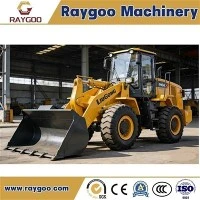
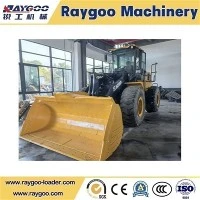
When it comes to heavy - duty construction and earth - moving tasks, rubber wheel dozers have emerged as indispensable machines. As a supplier of rubber wheel dozers, I've witnessed firsthand the critical role stability plays when these beasts of machines are used to push heavy loads. In this blog, we'll dive deep into the concept of stability in a rubber wheel dozer during heavy - load pushing operations.
Understanding the Basics of Stability in Dozers
Stability can be defined as the ability of a machine to remain upright and in control under various operating conditions. In the case of a rubber wheel dozer, it is crucial for safe and efficient operation, especially when pushing heavy loads. A dozer that lacks stability can tip over, causing damage to the machine, endangering the operator, and halting construction projects.
The stability of a rubber wheel dozer is governed by several factors. One of the primary factors is the machine's center of gravity. The center of gravity is the point where the entire weight of the dozer is considered to be concentrated. For a dozer to be stable, the center of gravity needs to remain within the footprint of the wheels. This footprint forms a base of support, and any shift of the center of gravity outside this area can lead to instability.
When a rubber wheel dozer starts pushing a heavy load, the distribution of forces changes. The weight of the load being pushed exerts a forward - acting force on the dozer. This force can cause the front of the dozer to lift slightly, shifting the center of gravity forward. If this shift is too significant, the dozer may lose stability and tip forward.
Design Features Affecting Stability
As a supplier, we understand that the design of a rubber wheel dozer is a key determinant of its stability. Modern rubber wheel dozers are engineered with several features to enhance stability during heavy - load operations.
Wheel Configuration
The number and arrangement of wheels play a vital role. Most rubber wheel dozers are equipped with four or more wheels. A four - wheel configuration provides a good balance between maneuverability and stability. The wider the wheelbase (the distance between the front and rear axles) and the track width (the distance between the left and right wheels), the larger the base of support. This larger base helps to keep the center of gravity within the safe limits, even when pushing heavy loads.
Counterweights
Counterweights are another important design feature. These are typically placed at the rear of the dozer. The purpose of the counterweight is to offset the forward - shifting of the center of gravity when the dozer is pushing a load. By adding weight at the back, the overall center of gravity of the machine is adjusted to remain within the stable zone. Advanced counterweight systems can be adjusted based on the type and weight of the load being pushed, providing an optimal balance for different operating conditions.
Blade Design
The design of the dozer blade also affects stability. The shape, size, and angle of the blade determine how the load is picked up and pushed. A well - designed blade distributes the load evenly across the front of the dozer. For example, a blade with a curved shape can reduce the stress on the front wheels by guiding the load more smoothly. Additionally, the blade's angle can be adjusted to control the amount of force exerted on the dozer during pushing, which in turn helps to maintain stability.
Operational Factors Influencing Stability
It's not just the design of the rubber wheel dozer that matters; operational factors also have a significant impact on stability when pushing heavy loads.
Speed
The speed at which the dozer is operating is crucial. When pushing a heavy load, a high speed can cause the dozer to lurch forward suddenly, shifting the center of gravity rapidly. This can lead to instability, especially on uneven terrain. Operators are advised to maintain a slow and steady speed to keep the machine under control. A gentle acceleration and deceleration also help to minimize the sudden changes in the distribution of forces within the dozer.
Terrain Conditions
The type of terrain on which the dozer is operating can greatly affect its stability. On soft or uneven ground, the wheels may sink or lose traction, causing the dozer to tilt or slide. For example, on a muddy construction site, the rubber wheels may not have enough grip, and the dozer may struggle to maintain a stable position while pushing a heavy load. In contrast, a hard and flat surface provides a more stable base for the dozer. It is important for operators to assess the terrain conditions before starting a heavy - load pushing operation and make appropriate adjustments to the dozer settings.
Load Placement and Distribution
How the load is placed and distributed also impacts stability. The load should be centered in front of the dozer as much as possible. If the load is unevenly distributed, it can cause the dozer to lean to one side, shifting the center of gravity outside the base of support. Additionally, when picking up a load, the dozer should approach it slowly and evenly to prevent sudden jolts that could disrupt the stability.
Importance of Stability for Construction Projects
The stability of a rubber wheel dozer when pushing heavy loads is not just about the safety of the machine and the operator; it also has a far - reaching impact on construction projects.
A stable dozer allows for more efficient work. When the dozer is stable, it can push heavy loads with greater precision. This means that the earth - moving and grading tasks can be completed more quickly and accurately. For example, in a road construction project, a stable dozer can create a smooth and level surface, which is essential for the subsequent stages of laying asphalt.
Moreover, stability reduces the risk of accidents. Construction sites are already high - risk environments, and a tipping dozer can cause serious harm to workers and damage to nearby equipment. By ensuring the stability of the rubber wheel dozer, construction companies can avoid costly downtime due to accidents and repairs.
Our Commitment as a Supplier
As a rubber wheel dozer supplier, we are committed to providing machines that offer excellent stability during heavy - load pushing. Our dozers are designed with the latest engineering techniques to optimize the center of gravity, wheel configuration, and blade design. We also offer training programs for operators to educate them about the importance of stability and how to operate the dozers safely under different conditions.
If you are looking for a reliable Rubber Tyre Dozer for your construction projects, we are here to help. Our team of experts can provide you with detailed information about our products and assist you in choosing the right dozer based on your specific requirements.
Conclusion
In conclusion, the stability of a rubber wheel dozer when pushing heavy loads is a complex but crucial aspect of its performance. It is influenced by a combination of design features and operational factors. Understanding these factors and taking appropriate measures to ensure stability is essential for safe and efficient construction operations.


If you're interested in learning more about our rubber wheel dozers or wish to discuss a potential purchase, we encourage you to reach out to us. Our dedicated sales team is ready to engage in a detailed discussion and guide you through the procurement process. Let's work together to find the perfect dozer solution for your projects.
References
- Smith, J. (2018). Heavy - Duty Equipment: Design and Operation. Construction Press.
- Johnson, R. (2020). Earth - Moving Machinery: Stability Analysis. Engineering Journal.
- Construction Equipment Manufacturers Association. (2021). Best Practices for Dozer Operation.